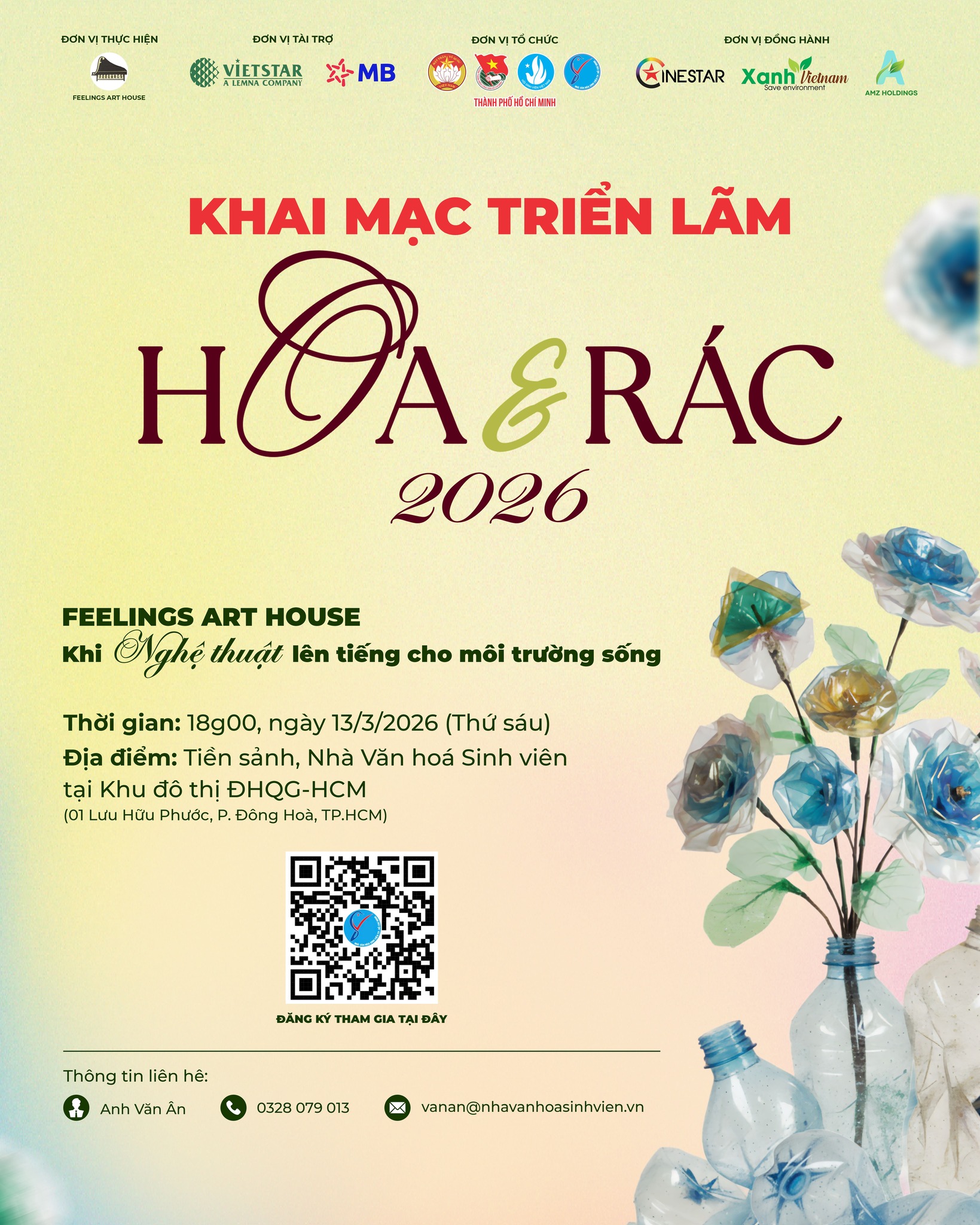
Welcome to The Student Cultural House at Viet Nam National University Ho Chi Minh City presents artworks created by Ngo Viet of Vietstar for the Flowers and Trash program of the Feelings group. Ngo Viet is both an infrastructure & environmental engineer and a visual artist who has worked in over 25 countries worldwide. He founded Vietstar, a plant that processes, recycles, and generates electricity for Ho Chi Minh City. He co-founded Feelings Art House, a group of professional artists specializing in contemporary music and dance. He founded the Flowers and Trash (Rejoice and Refuse) program to spread the message of environmental protection and has performed throughout Vietnam. The exhibition features artworks, sometimes enormous in size (over 8 meters and weighing several tons), meticulously assembled and staged to highlight the idea and journey of repurposing discarded, polluting, or resource-wasting materials. The unique creativity aims to elevate art to a high level, drawing attention and concern for the environment among viewers. These artworks are made from wasted materials from large, decommissioned waste processing machines for the city’s domestic wastes. Instead of being discarded, they are given a new life, using art to raise awareness and responsibility for environmental preservation. The exhibition will begin on March 7, 2026, with the opening ceremony on March 13, 2026, and will conclude on March 29, 2026.
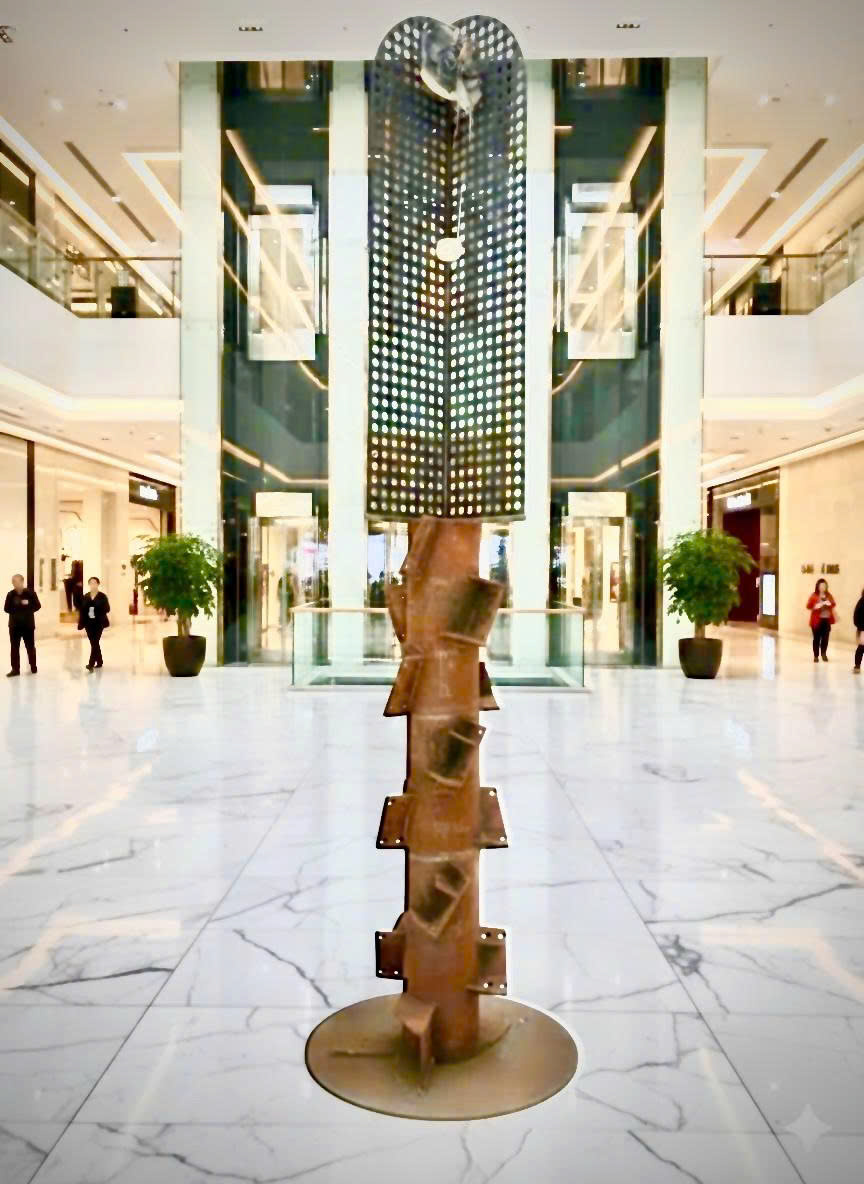
A CLOCK THAT SORTS TIME
A 5-m tall art work from rejects by the Vietstar Group.
Installed in the main hall of The Student Cultural House at Viet Nam National University Ho Chi Minh City, this work was created by the Vietstar Group for the of Rejoice and Refuse Festival – March 2026. It invites the city’s residents to pause, look up, and read time differently—to feel how love, like time, is moving faster than usual.
The sculpture is composed of two reclaimed industrial elements, reassembled into a vertical totem.
The base column is a discarded tumbling shaft—a core mechanical axis once used in waste-sorting systems. Though rarely noticed, this ingenious component plays a vital role in reducing plastic waste in everyday life. It works quietly to separate organic matter from HDPE and LDPE plastics in household waste from Ho Chi Minh City and neighboring provinces, transforming refuse into recycled plastic pellets and compost. In this work, the shaft stands upright, stripped of motion yet full of memory—an invisible laborer finally brought into view.
Rising above it is the tower clock, constructed from a perforated steel floor grid originally used to separate organic materials in waste-processing lines. Embedded within the grid is a real clock—an object deeply connected to the Vietstar plant since its earliest trial operations, when the first tons of waste were processed. For over fifteen years, this machine operated on the factory floor, hooking, scraping, recycling.
Now, it returns as a clock.
It ticks slightly faster than normal, echoing the rhythm of a grandfather’s clock—a reminder passed down through generations. Time here is no longer neutral. It accelerates, urging reflection: What are we consuming? What are we leaving behind? How much time do we truly have?
By reviving industrial remnants as poetic form, the work collapses the distance between machine and memory, waste and care, labor and love. It stands not as a monument, but as a question—quietly asking its viewers to reconsider their relationship with time, responsibility, and the unseen systems that sustain urban life.
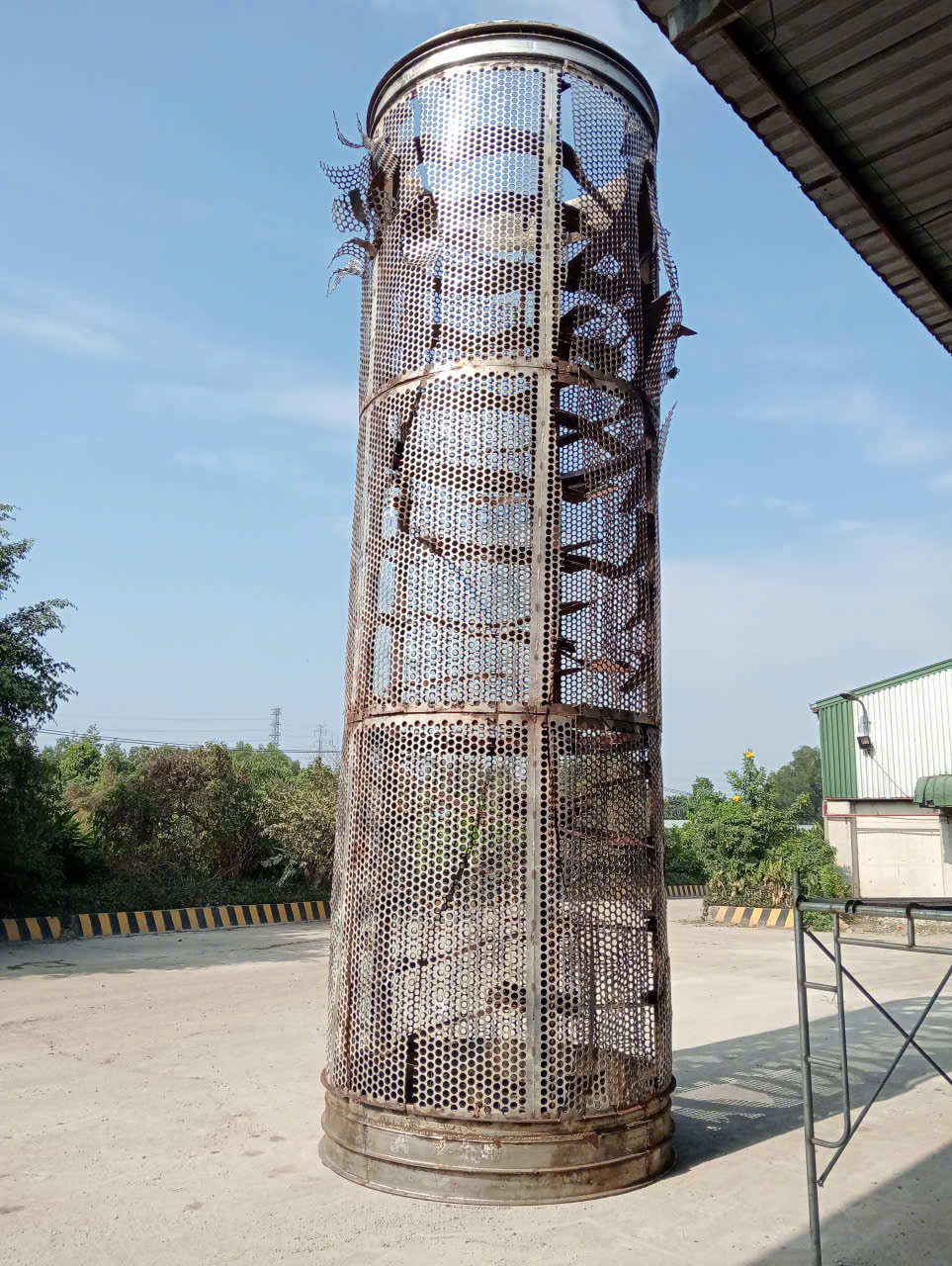
ABOVE YOU SPRING FLOWERS – BELOW ME FALL LEAVES
A 8-m tall art work made of rejects by the Vietstar Group.
The Scrap Tower of Rejoice and Refuse is constructed by the Vietstar Group from the skeletal frames of two industrial screening machines—TerraSelect 7 and TerraSelect 9, German-engineered technologies that have operated continuously for more than fifteen years. During that time, they processed and sorted hundreds of thousands of tons of organic waste, transforming it into compost that nourishes agricultural production across Vietnam. Registered with Guinness Vietnam, this moment marks the largest environmental art action in Vietnam – when silence carries weight, and waste fills the sky.
The tower’s cylindrical body is wrapped in stainless steel mesh reclaimed from rotary screening drums once used for waste and compost separation. These perforated surfaces—designed to filter, sift, and separate—now allow light, air, and sky to pass through. What was once an instrument of control becomes a vessel of openness.
Standing upright in a public space, the tower marks the vertical accumulation of labor, time, and memories. Every layer carries the residue of an industrial past dedicated to regeneration over self-indulgence. It is a monument not to consumption, but to quiet endurance—to systems that worked relentlessly, out of sight, to return nutrients to the soil.
Now, the work reaches a turning point. A crowd of 2,000, wearing yellow, assembles around it, and then spreads out like a field of sunflowers. Having fulfilled its service to the earth, the tower is released, released from gravity, from duty, from enclosure. It is time to let the tower rise.
To let waste become form, form become symbol, and symbol dissolve into the sky.
What ascends is not mere metal, but a collective sigh. This is not a spectacle. It is a pause. A letting go.
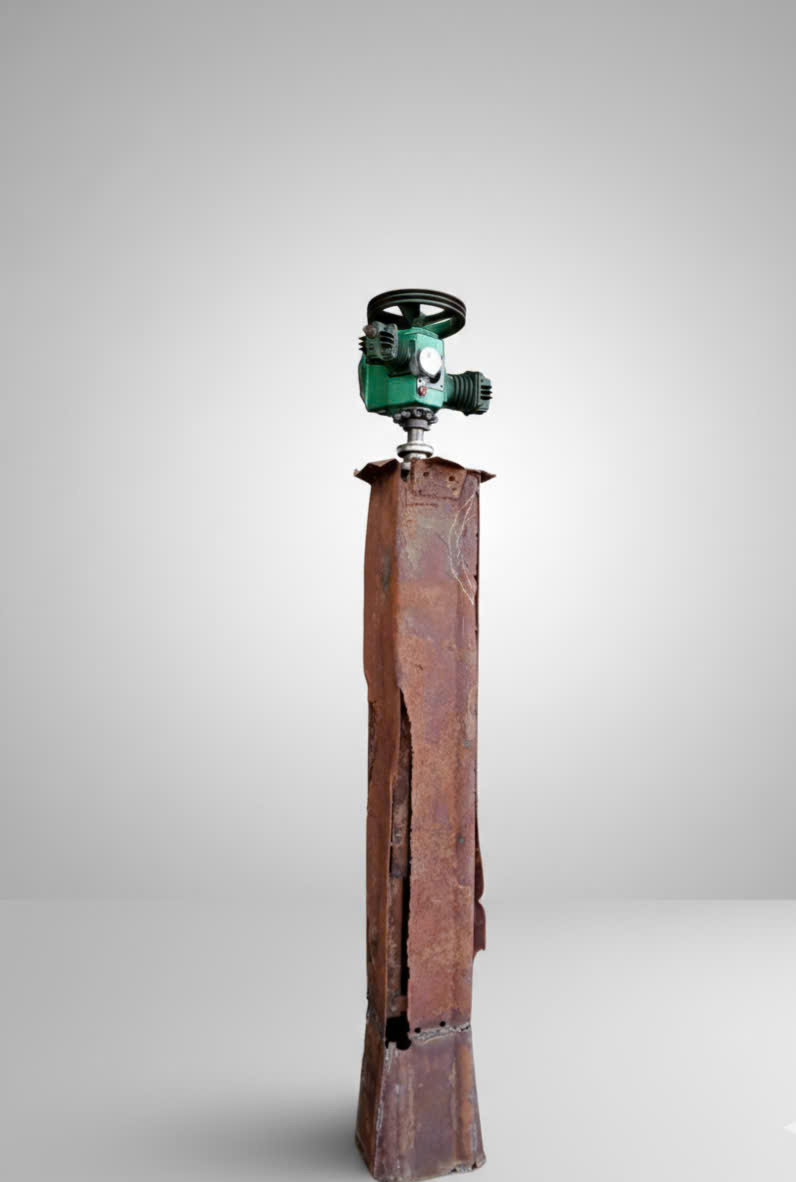
UNTURNABLE TURN TABLE
The artwork is 2.7 meters tall.
This vertical sculpture brings together two reclaimed industrial elements into a single, quiet axis. The air compressor head once powered sludge dewatering in a wastewater treatment station, while the chain conveyor paddle below transported municipal waste into sorting lines.
Removed from their original function, these components no longer compress or carry. They stand suspended between stillness and motion—suggesting a table that turns without turning.
Unturnable Turning Table reflects on the unseen intelligence of infrastructure and the small, continuous mechanisms that shape the cycles of waste, water, and care in urban life.
SMALL TABLE FOR INTIMATE CONVERSATION
The artwork is 2.8 meters tall.
The work stands upright like a table not meant for the body, but for words. Its base is a conveyor paddle—once pulling waste through endless cycles of sorting.
The table’s body, as if split in half, is a Discreen gearbox: Where refuse was separated, organic matter returned to soil, plastics entered another life.
Freed from function, the parts no longer move. They hold still, balancing a pause—a place to lean, to listen, to speak softly.
A Small Table for Intimate Conversation offers a quiet proposition: That even the heaviest systems can become supports for care, and for human connection.
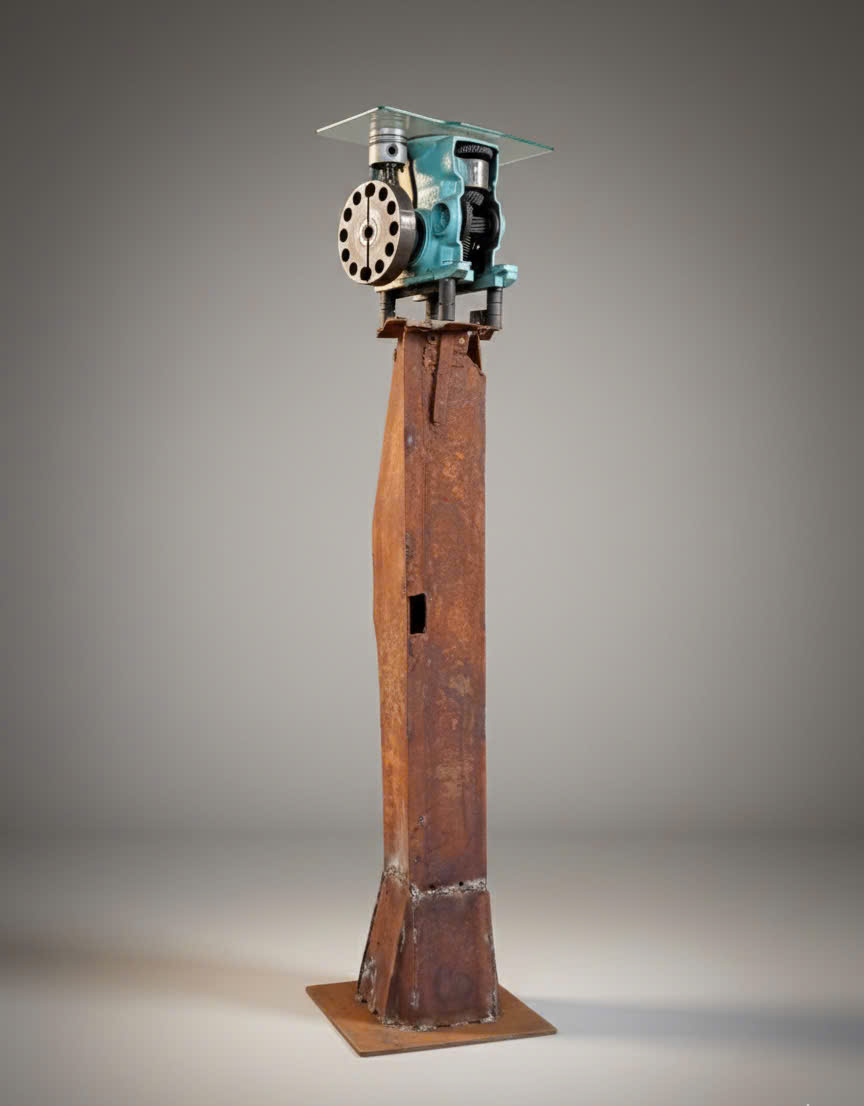
SMALL TABLE FOR TEA, WATCHING FERTILIZER TRUCKS TRAVEL BETWEEN PROVINCES
The artwork is 2.8 meters tall.
This sculpture is made from the gearbox of an 80-meter conveyor system that once carried organic waste from sorting lines to the composting facility, where it was transformed into fertilizer for agriculture.
Reassembled vertically, the machine is no longer in motion. It becomes a pause—a small table for quiet attention. From this imagined seat, one watches fertilizer trucks leave the plant, crossing provinces, carrying with them time, labor, and the slow work of renewal.
A moment of tea within a long cycle of care, endurance, and return.
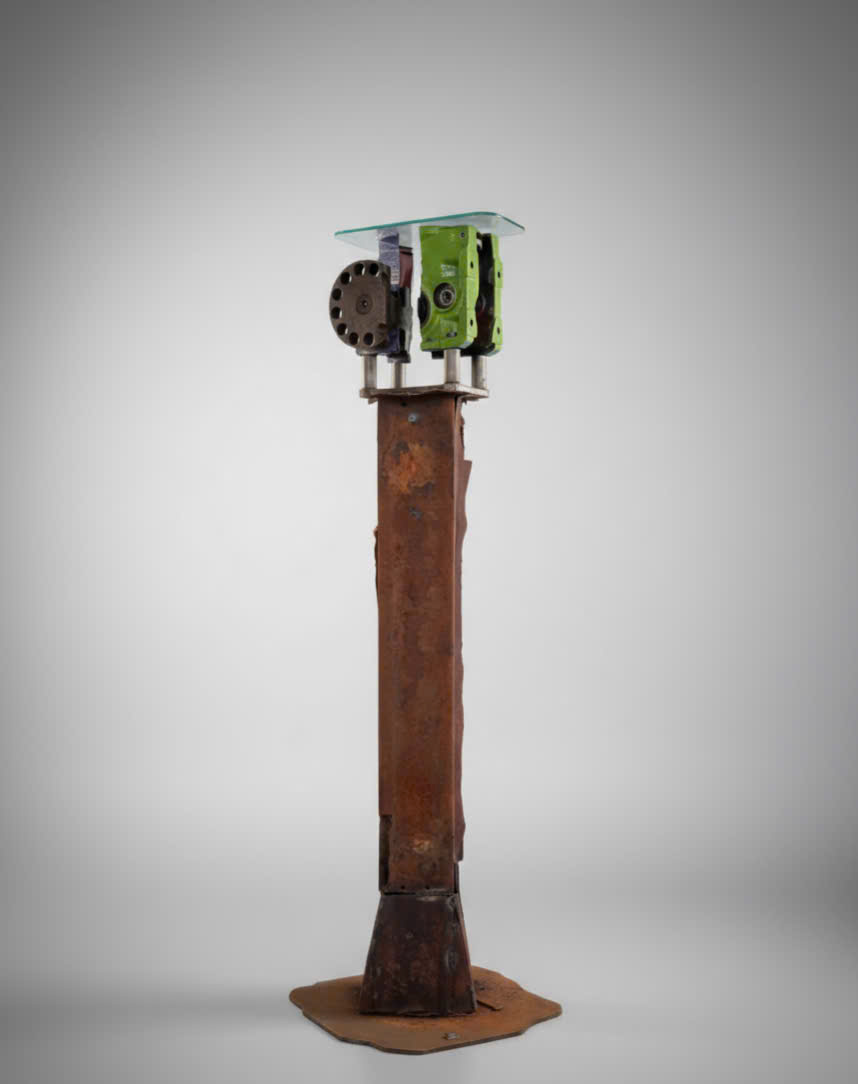
TABLE EXPOSING TRUTH
The artwork is 3.5 meters tall.
This table is assembled from components that once carried the weight of a city. Waste-pushing shafts, crankshafts, crusher frames, and conveyor chains—mechanisms that quietly processed, sorted, and regenerated millions of tons of waste over more than fifteen years.
Reconfigured as sculpture, all movement comes to a halt. The machine no longer labors; it stands as a silent witness. There is no refuge beneath this table—light passes freely through its body, exposing the underlying structure in full.
The work marks a shift from function to responsibility, from industry to environmental ethics, where truth is held accountable.
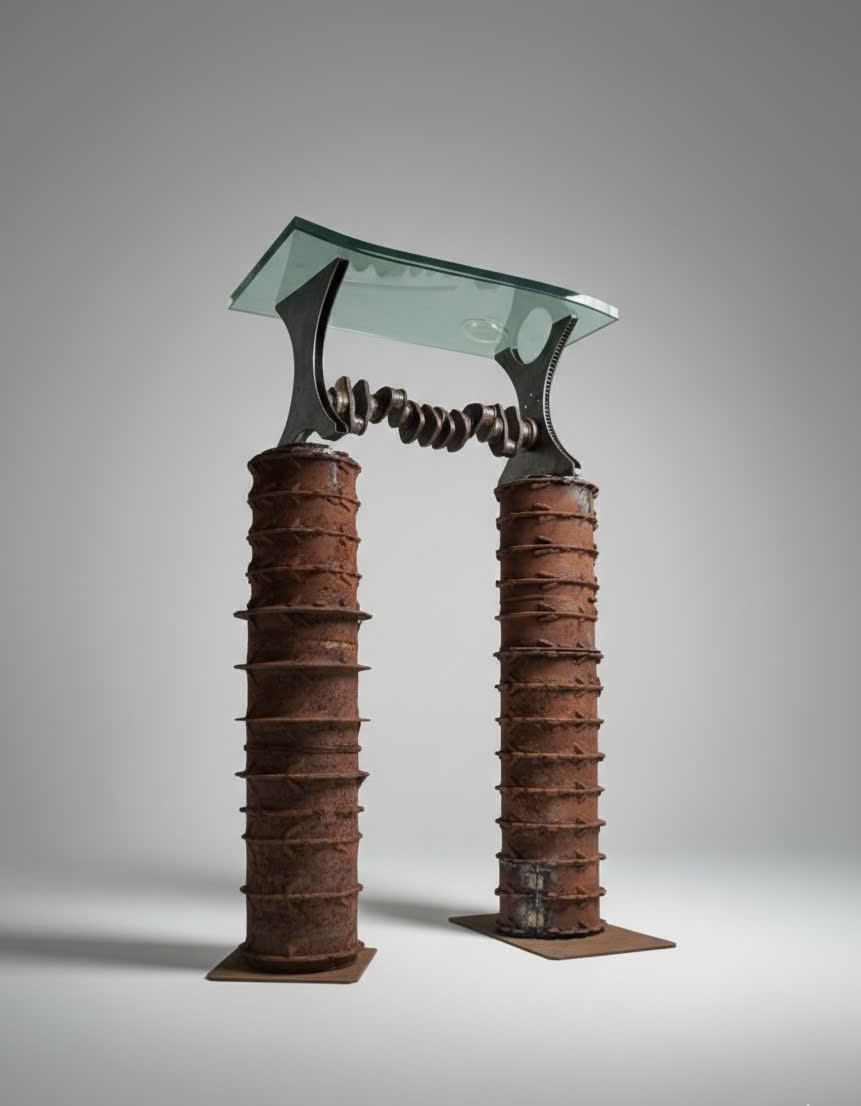
SMALL ROUND CORNER CHAIR BESIDE YOU
The artwork is 2.7 meters tall.
This chair is assembled from components that once carried a city’s waste stream. Conveyor chain paddles form the column; above them sits the gearbox of a Discreen sorter, where waste was separated and prepared for renewal; at the top rests an eccentric cam gearbox by Sumitomo—a mechanical heartbeat that once ran without pause.
For fifteen years, these machines worked in repetitive motions. Now they become this chair, like a forlorn and broken-winged deity above our heads. It does not invite you to sit down, but to look up.
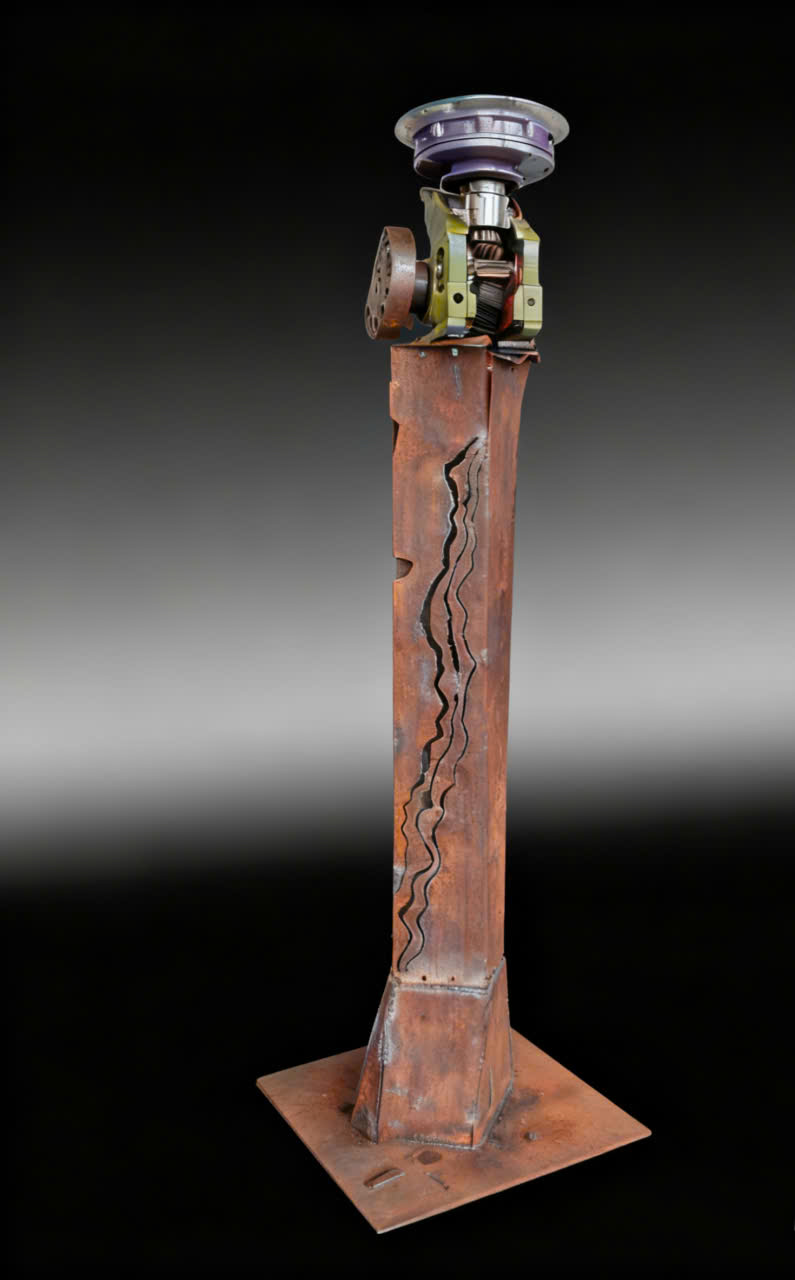
ROTATING TABLE OF NINE LIVES
The artwork is 2.7 meters tall.
The column is formed from the chain paddles of a steel conveyor; the body is the universal joint head of a Mitsubishi forklift—once used to transport metal scrap: bottle caps, knives, spoons, forks, nails… extracted from household waste. Components shaped by heavy labor and disposal now rise upright and still, becoming a modest tabletop for a cup of coffee, for cutlery returned to daily use. The work marks a quiet transposition: from industry to intimacy, from discard to a renewed presence—allowed to live again, a few times more.
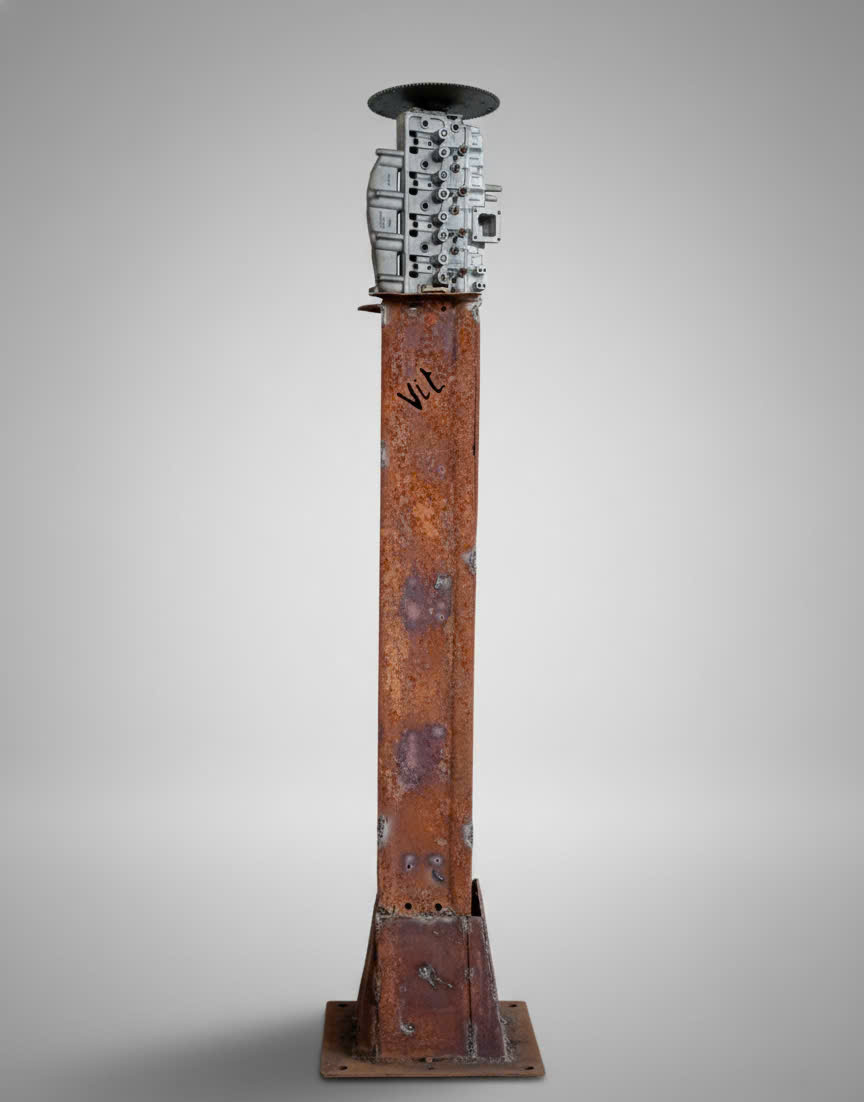
VENUS MIRROR TABLE
The artwork is 3.2 meters tall.
Like a flower blooming in the heart of the night, the elevated eccentric table is a Sumitomo gearbox, with its core being the shaft of a Bag Breaker machine. It performs the vital task of tearing open large waste bags from the city’s restaurants and eateries. Below, the chain plates drive the conveyor system, feeding the material into a sorting line that separates organic matter for fertilizer and recovers plastic for recycling.
The beauty of Venus is everywhere—within the circle of an embrace, and far beyond the day-and-night vision of humanity.
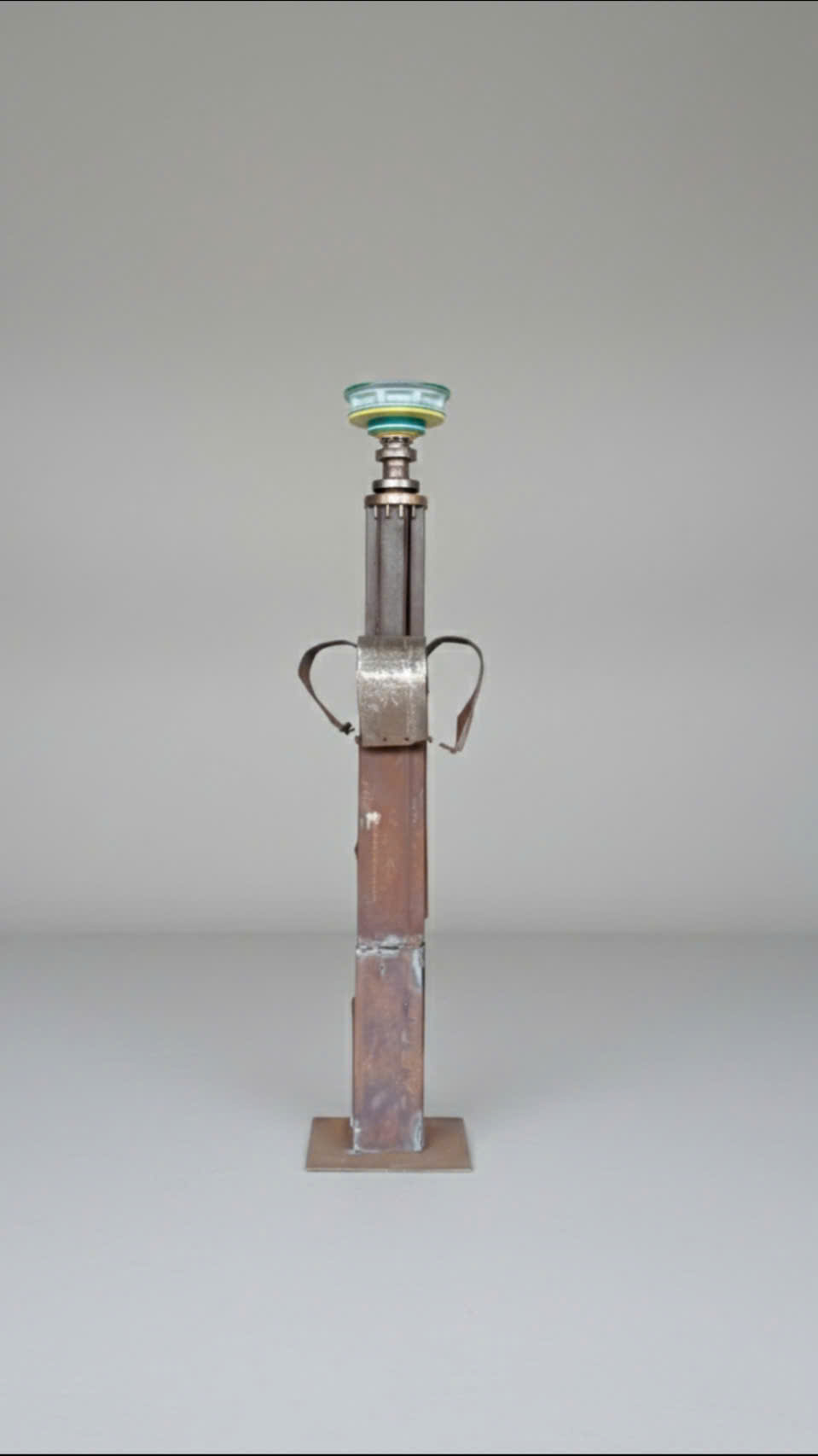
ROTARY TABLE
The artwork is 2.7 meters tall.
The table is a fusion of chain plates from a 90-meter conveyor—which carries waste from the receiving station to the trommel screen—combined with a drive shaft from a retired Skid Loader and a Sumitomo reduction gearbox that has reached the end of its service life. The table can rotate, yet it remains beyond your reach and mine. It sits high above, like a guardian deity watching over a world in constant flux.
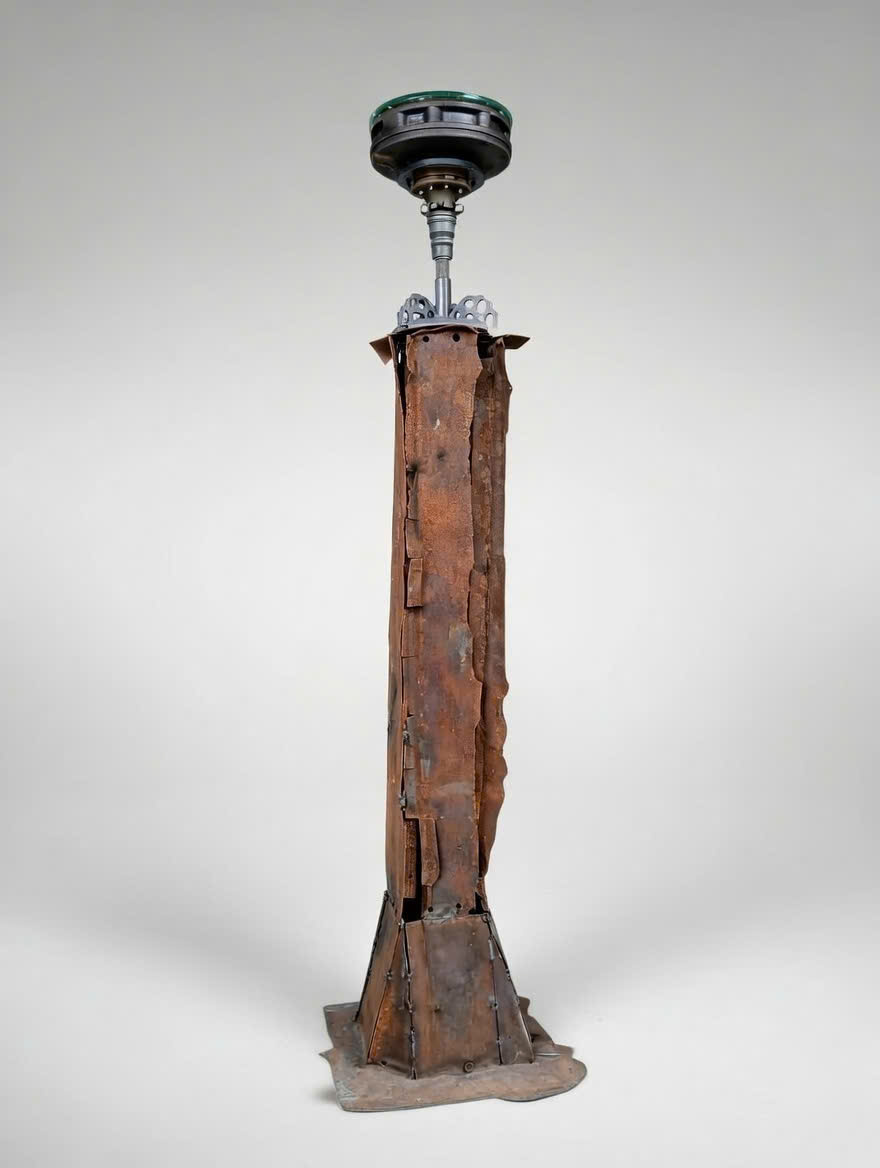
LEVITATING TRINITY
The artwork is 3.3 meters tall.
The three thrones from rejects.
The base is from a machine to sort plastic waste. The middle chair is from a unit to segregate waste of less than 100mm (fruits, organics …); the 2 side chairs are from a unit to segregate waste of smaller dimensions to make organic compost. The frames are from discarded materials.
There is a long crack to let the light in, freeing wretched souls captured in waste. They become the three levitating thrones up above.
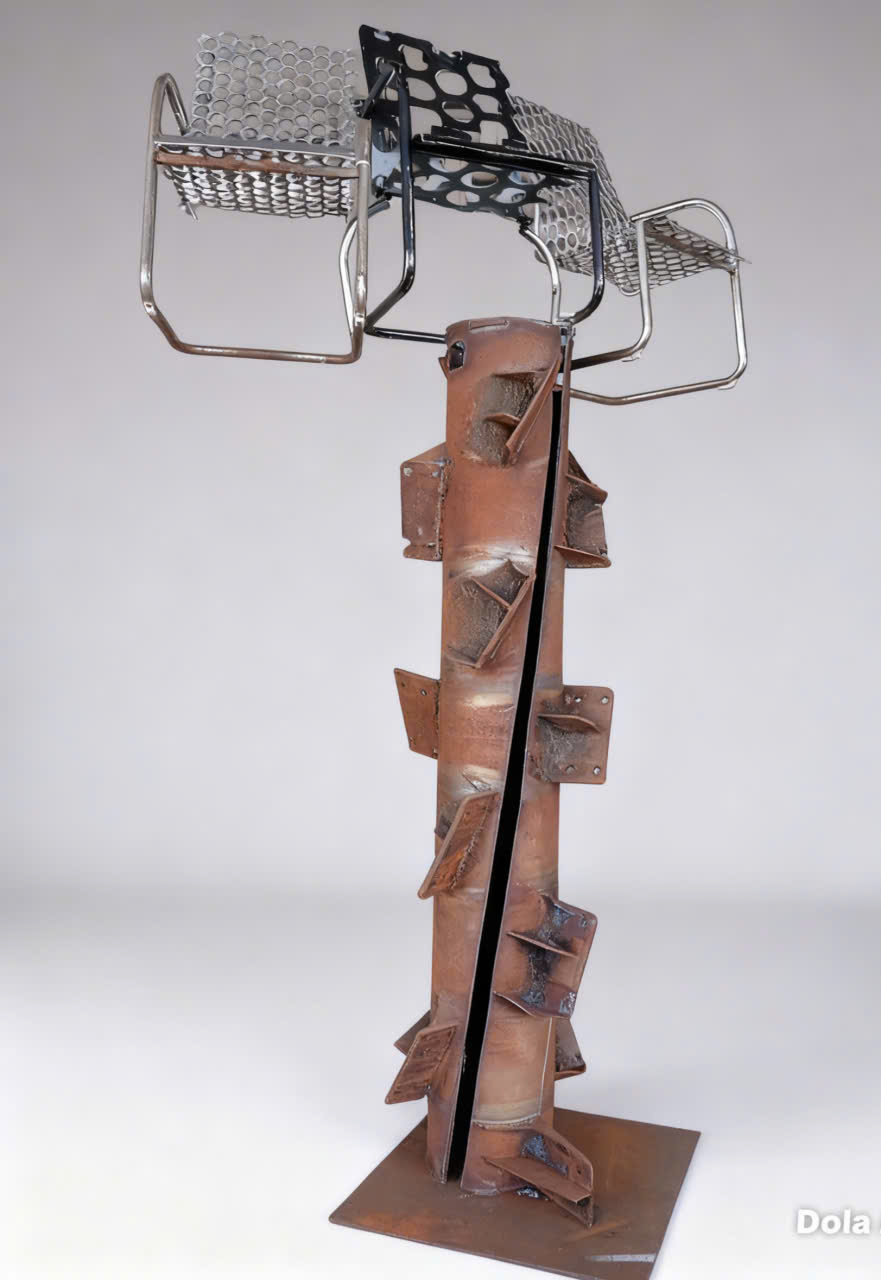
ON TOP OF THE MIST
The artwork is 4.5 meters tall.
Made from the engine of a Backhus machine to turn composting materials. The two columns are from the collapsed building housing the Backhus, after processing hundreds of thousands tons of garbage.
Toiling in the dark for eons, now it emerges into the mist of the heights, forever a witness of passing time.
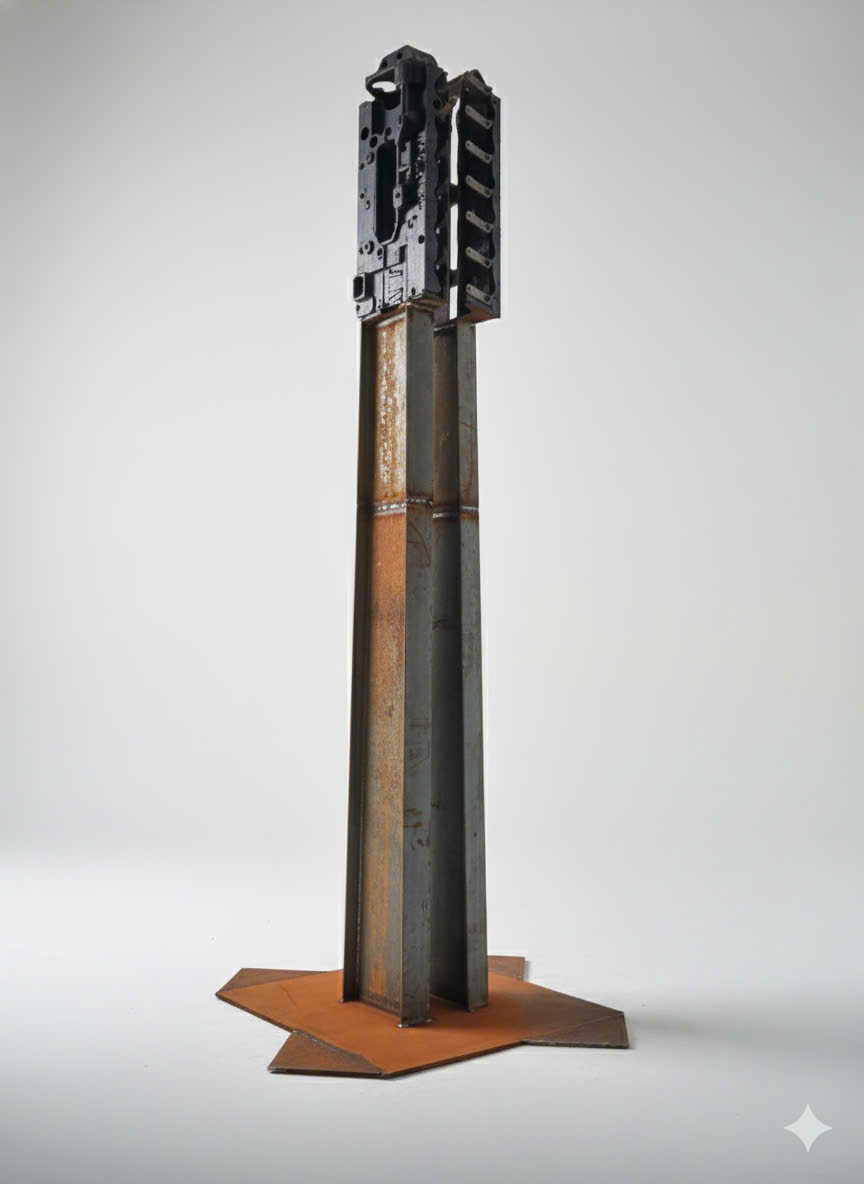
GARBAGE MOUNTAIN
Mountains of plastic waste overflowing into rivers and seas.
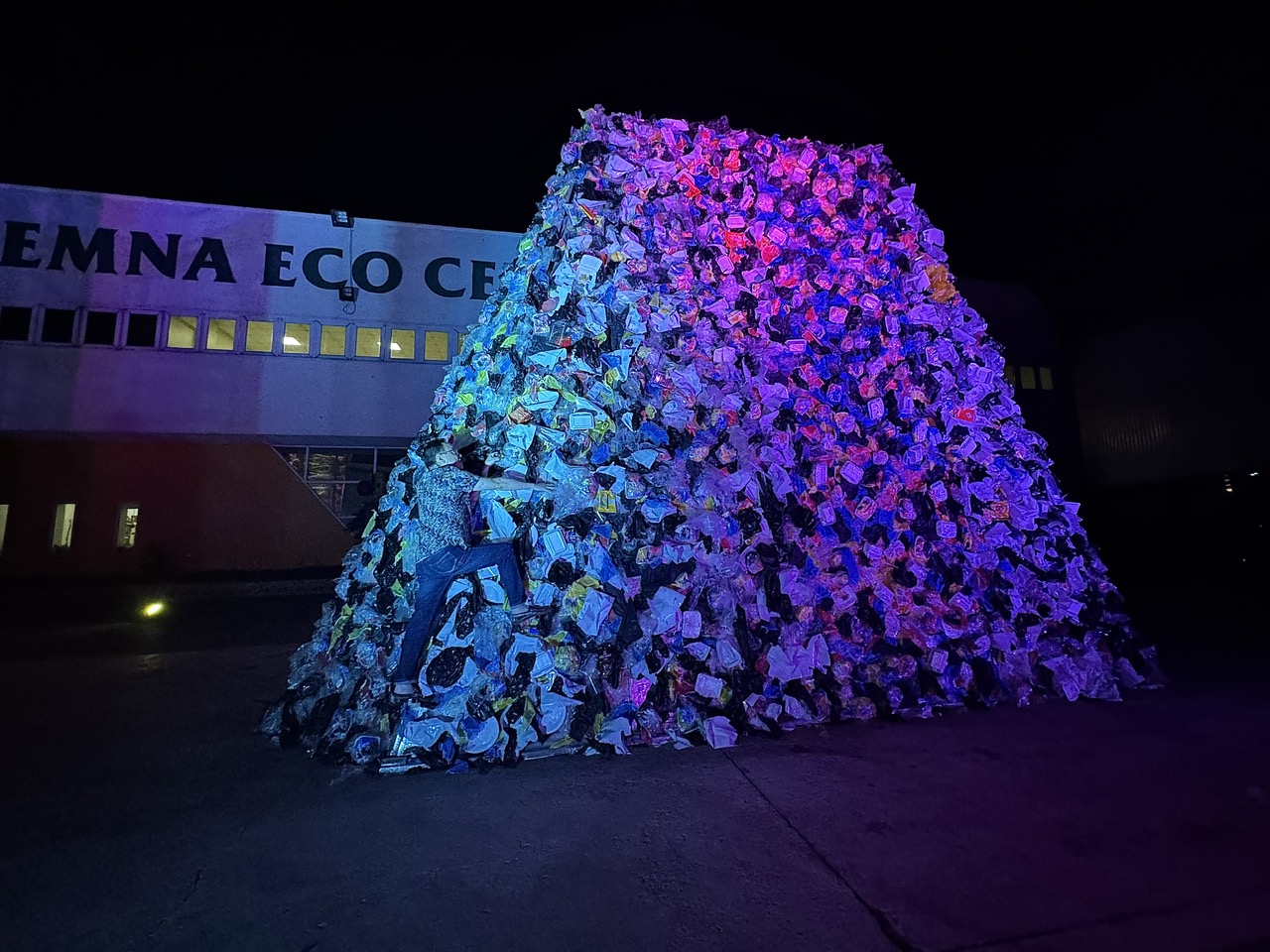
You’ve just seen 13 pieces from the ‘Flowers and Trash’ exhibition, brought to life by Ngo Viet. Pollution is not a problem for any one country alone, but a global problem. Ngo Viet said: “We need all of humanity to change the world”. The goal of “Flowers and Trash” is to spread its message across the globe.